Got a post-operative scar? Or a wound that, despite your best efforts, just won’t close up and heal? Or have you recently injured yourself and would like to heal the wound quickly and reduce unsightly scar tissue? I can help speed up recovery and reduce scar tissue formation using low level laser therapy even though some conditions, like diabetes, often make it very difficult to heal fully.
How does skin heal?
So how does skin heal – what stages occur and how long does it take?
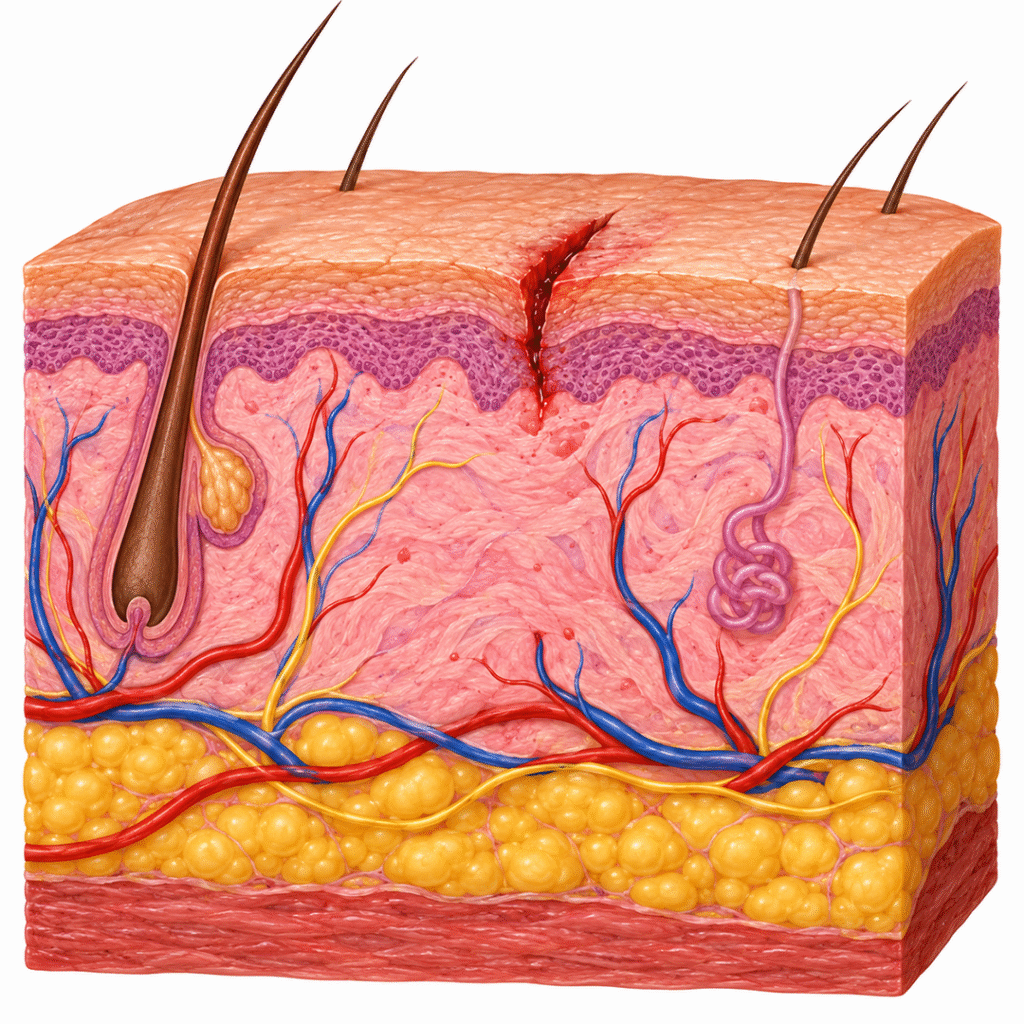
When your skin is damaged by a cut, wound, operation or injury, your body immediately starts a carefully organised repair process. Healing generally occurs in four overlapping stages.
- Clotting
- Inflammation
- Repair
- Remodel
Call for a chat: 07816 303 742
Clotting: Stopping the bleeding – minutes to hours
Blood vessels narrow and a clot forms to stop bleeding. This creates a temporary protective covering over the damaged area.
Inflammation: Immobilising the area – hours to several days
Your immune system sends cells and chemical messengers to the area. These help remove damaged tissue and protect against infection. Redness, warmth, swelling and some discomfort are normal parts of this stage. Read more about: Inflammations protective response.
Repair: Rebuilding cells – several days to several weeks
New tissue and tiny blood vessels develop. Fibroblast cells produce collagen, which provides strength and structure to the repairing skin. The wound gradually closes and becomes stronger.
Remodel: Reorganising collagen – several months and sometimes longer
The newly formed collagen is reorganised and strengthened. A scar may initially appear red, raised or firm but usually becomes flatter, softer and paler over time. Scar tissue can continue to mature for 12–18 months or more.
Call for a chat: 07816 303 742
Why does the healing process vary?
The speed and quality of healing varies between people. Ageing can slow repair because skin becomes thinner and blood supply and collagen production may decrease.
Diabetes, poor circulation, smoking, infection, poor nutrition, certain medications and conditions affecting the immune system can also delay healing. Excessive tension or repeated irritation of a wound may interfere with normal repair.
Can laser therapy help heal skin?
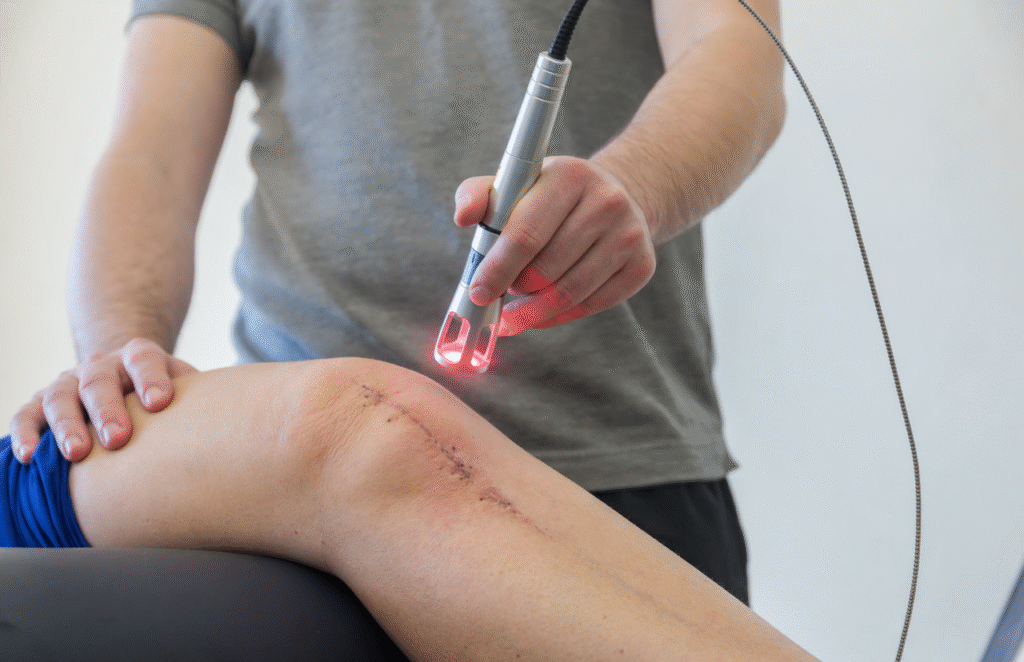
K-Laser can be used as an additional treatment to speed up the healing process. The laser light energy influences cellular activity and circulation, helping create an environment that supports tissue repair. It also reduces inflammation and discomfort. When used appropriately alongside normal wound care, it help wounds heal more efficiently and reduces the formation and maturation of scar tissue.
Call for a chat: 07816 303 742

Read more: How low level laser therapy can help for post-operative recovery
Laser treatment case studies
Case study: Open wound
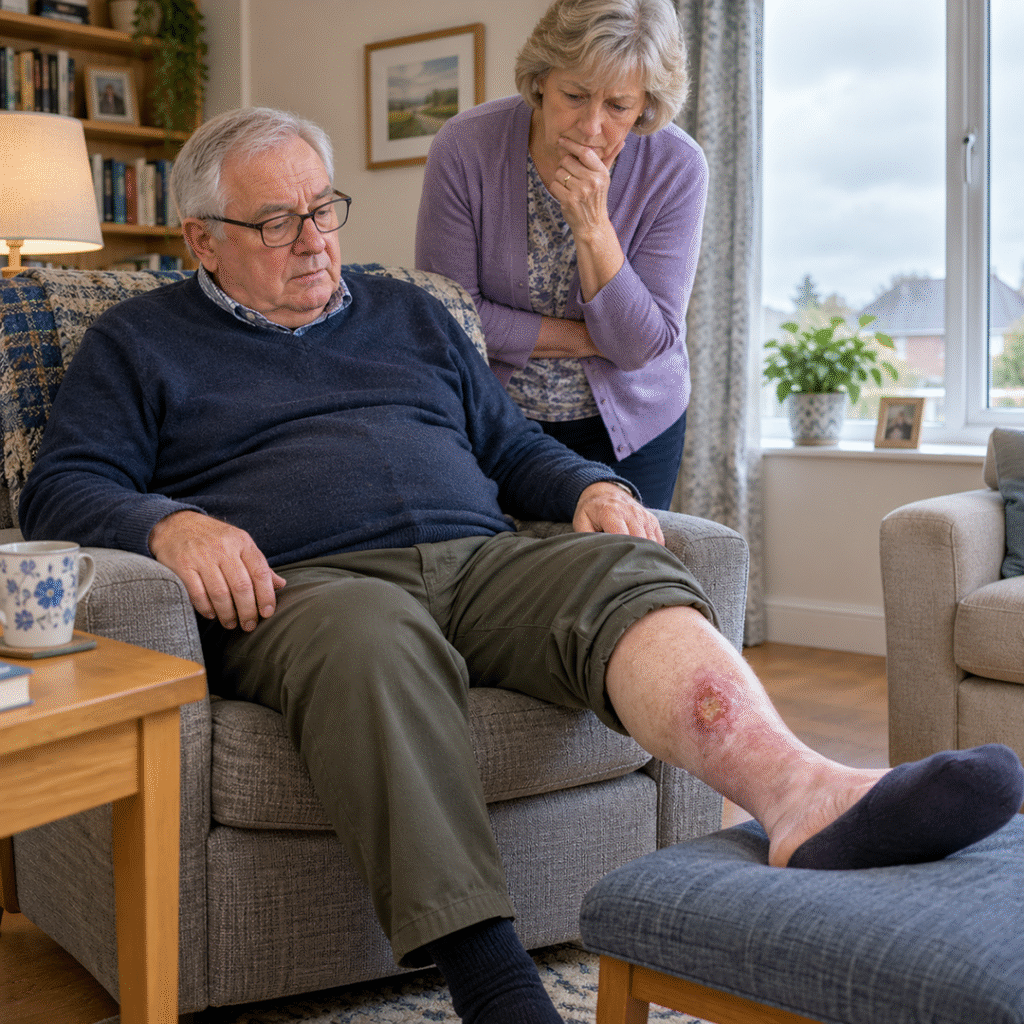
Mr DR attended my clinic with an open wound the size of a two pound coin on his leg, which hadn’t healed for 14 months. He isn’t diabetic but was in his early eighties and was hoping to have a hip operation but was being advised by his surgeon that his wound was a risky route for infection to invade his body and so was denied surgery. We started with K-Laser treatments twice a week for six weeks and, coupled with his good treatment of the wound at home using iodine infused dressings, the skin completely grew back and sealed over. He was able to have surgery soon afterwards.
Case study: Knee replacement surgery
Case Study Example 2: Mr LK of Ditton Priors area attended my clinic following a full knee replacement operation. In his early sixties and a keen cyclist, Mr LK wanted to recover quickly and get back out exercising as soon as possible. A course of twelve K-Laser treatments reduced the scarring to his skin and in his muscles and helped to reduce inflammation and speed up bone repair. I’m pleased to say that, less than three months after his operation, he is off on a cycling holiday to Spain with his chums.
Further reading: How low level laser therapy can help muscles, tendons and ligaments.
Case study: Damaged fingers
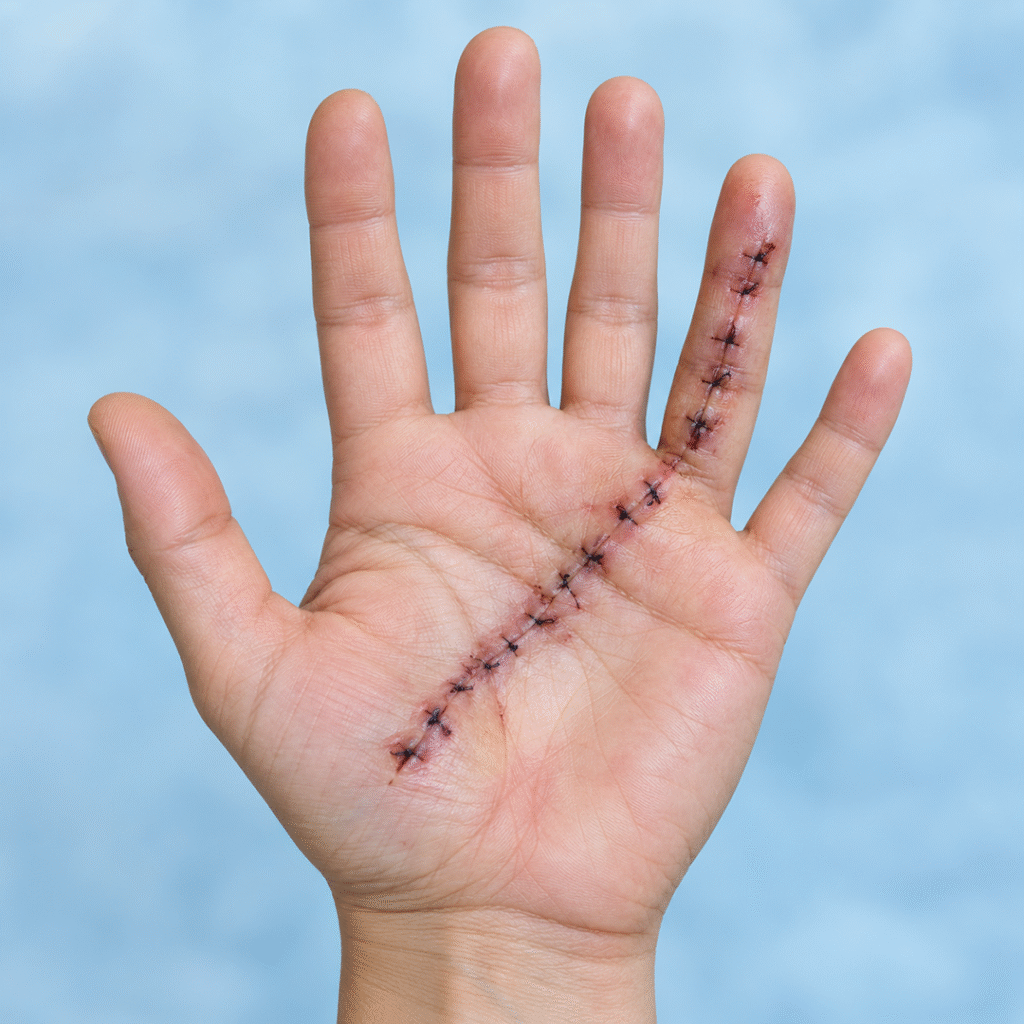
Miss HM of the Clee Hill area is a keen equestrian, she works a lot with horses. One day she got her fingers tangled and jerked in some reins, tearing her skin and injuring her joints and tendons. Her fingers became infected and she couldn’t use her hand as well as she’d like to. A course of six K-Laser treatments and effective cleaning routines and first aid dressings greatly improved matters. Regular top-up treatments in the following months got her grip back to 90-95% recovery when all seemed lost.
Read more about the facts: Low level laser therapy positive effects of this non-invasive treatment.
Call for a chat: 07816 303 742
Whether you come for your first treatment, or you are a regular, I will always assess the presenting ailment and look for the most appropriate solution.
You will receive a treatment that is professional, clinically relevant, and appropriate towards your recovery.