Brrrr! 🥶 It’s been bitter cold!!! Why am I SO achy?!? 😖
This months blog is all about muscles fibres! We’ve all got them and, with the colder weather around this time of year, what is happening to make things feel more difficult compared to the joy and freedom of warm weather that we relished so much in the great summer of 2025…?
Why does pain and injury seem to occur more in colder weather?
- Cold temperatures makes our muscles, tendons, joints, and ligaments become stiffer.
- Poorer blood and oxygen supply compromises the body’s ability to work optimally.
- Postural difference, protecting oneself against the cold (hunched shoulders, head forwards, and hands in pockets) lead to less efficient biomechanical functions.
Simply put, the muscles aren’t working optimally…
Call for a chat: 07816 303 742

Now let’s look into our bodies to understand ourselves and what we are made of… What do muscles look like? What makes them work? All of us undertake tasks, work-based activities, or physical training that use muscle fibres but what do we know about our muscles?
How muscles work
Simply put, muscles work by contracting and pulling on the bones they are attached to (by tendons) causing movement. They do so by the sliding filament theory where nerve signals trigger a chain reaction to shorten the muscles.
There are two main categories of muscle fibres… Type 1 (slow-twitch) and Type 2 (fast-twitch). Type 1
(slow-twitch) are fatigue resistant (don’t get tired as easily) and are used for endurance… and Type 2 (fast-twitch) are prone to fatigue and are used for short bursts of power or speed.
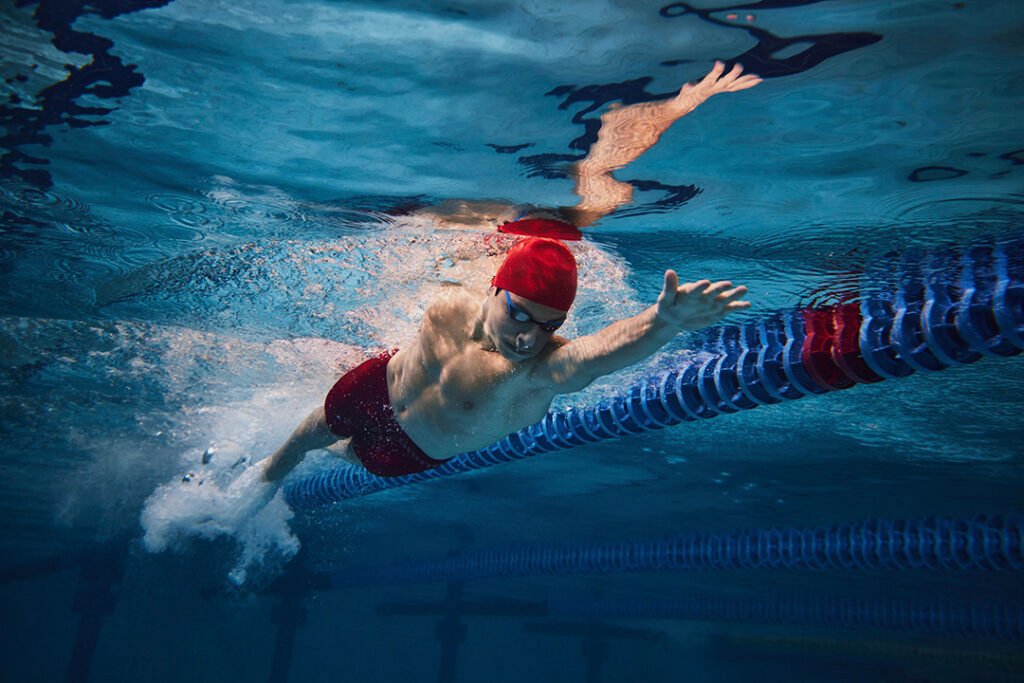
Type 2 are also sub-categorised into Type 2a – for moderate force production with fast contraction speeds – and Type 2b – for use in both strength and endurance (for events like middle-distance running or swimming).
But let’s not get too tied up in their technical aspects, you already get the picture… let’s mention instead about what they look like and what they contain… Type 1 are red in colour due to higher myoglobin content and Type 2 fibres are white in colour because they have fewer mitochondria and a lower myoglobin content.
This is important for understanding recovery after injury as myoglobin helps to store and transport oxygen to the muscles and mitochondria generates each muscle cell’s energy (ATP) to hasten cellular recovery.
In short, all muscle fibres can injure but Type 1 (slow-twitch) due to their higher myoglobin content, are fatigue resistant, and also have higher mitochondria content so they recover faster compared to Type 2 (fast-twitch) fibres. So all muscle fibres can injure and will recover at a rate but Type 2 will be slower to recover due to their poorer mitochondrial and myoglobin content.
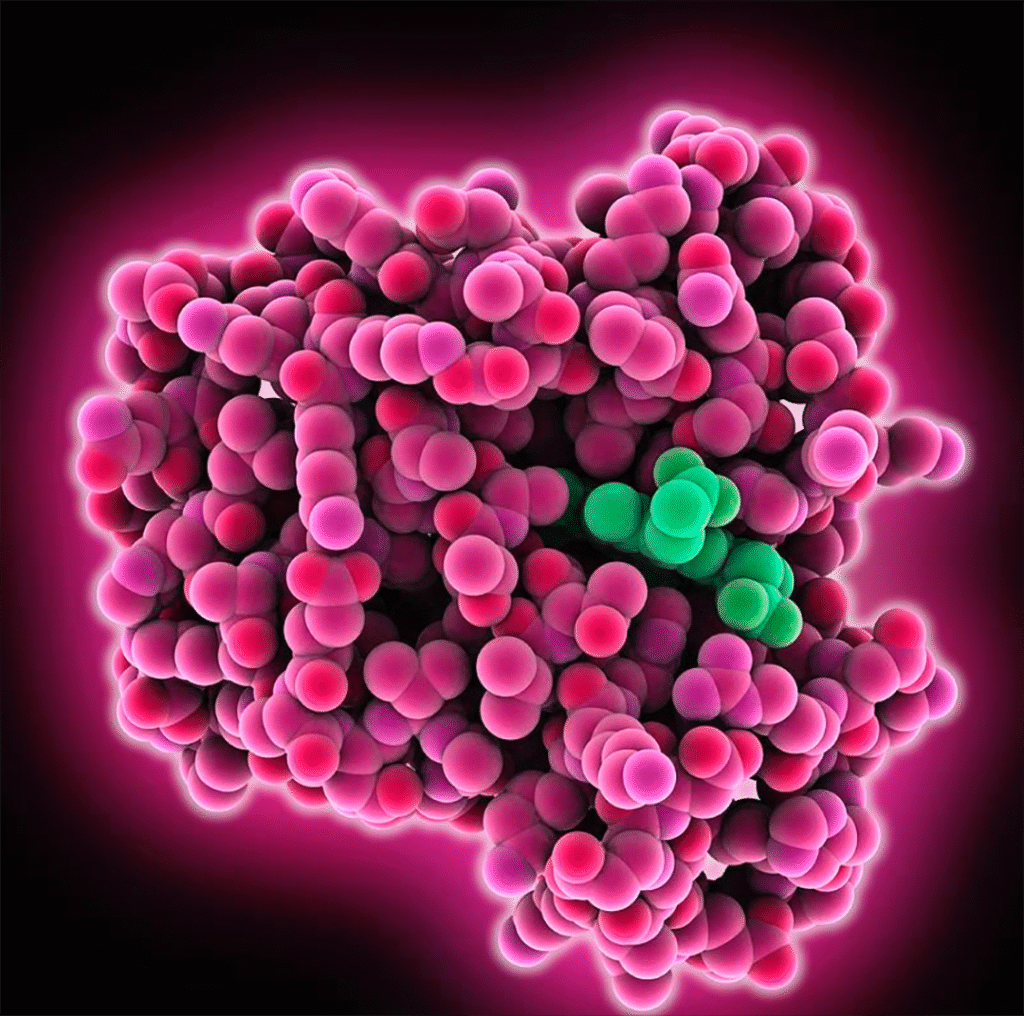
K-Laser stimulates our cells production of ATP
K-Laser therapy stimulates the mitochondria’s production of ATP and heightens myoglobin’s ability to transport oxygenated blood to damage tissues hastening cellular recovery! Already interested? You can skip to finding out about everything that K-Laser does by jumping over to my K-Laser page.
Call Sam to find out more about how K-Laser can benefit you: 07816 303 742
And, for inquisitive minds, here’s a little more info about how to make yourself even stronger, have better range of motion, and develop a lower resting heart rate, as well as a range of other health benefits…
Intelligent muscle training tips
National treasure, doctor, and TV and radio personality, Michael Mosley collapsed and died on the same day, June 5th 2024, in a rocky area near Agia Marina Beach on the Greek island, Symi. A sad day for us all, he left a wonderful legacy of tips and knowledge of how to care for ourselves via simple methods and, whilst Michael didn’t create or develop many of the methods he discussed, he put them to us in such a way that we understood them and could integrate them into our day to day lives.
I already knew of the phases of muscle activity when he discussed one of them in his Radio 4 programme, “Just One Thing”. Thank you BBC, this is still available on BBC Sounds at https://www.bbc.co.uk/programmes/m0016xq7\
Briefly then, these are the phases of muscle activity and they enlist the various muscle fibres discussed previously in this blog.
- Concentric – A muscle shortens while under tension to overcome load or create movement (like lifting a cup of tea to our mouth)
- Eccentric – A muscle lengthens, while under tension, acting as a braking force to control load or movement (like when sitting down)
- Isometric – A muscles generates forces and is under tension but does not change length (as in the
“plank” exercise). - Pylometric – A muscle quickly lengthens and afterwards shortens to create explosive movements (like box jumps, burpees, smashing a tennis ball, and so on…)
And they are all interesting and relevant in our life activities but the one Michael Mosley discusses most in his radio programme is “Eccentric Exercise” and this is the one I’d like to draw your attention to.
Eccentric exercise, or lengthening a muscle under resistance, is hugely beneficial to anyone training for anything at any stage of life but especially as we age… and here’s why…
Muscle training for older people
In the study discussed on the radio programme, in 6 weeks of training a group of over 65 years old showed a massive increase in strength (30-50%!) and an average of 10% increase in muscle mass with a fourfold (x4) increase in range of motion.
Other studies also show improvements in resting heart rate (an important gauge of health), muscle function, bone density, and blood fat levels.
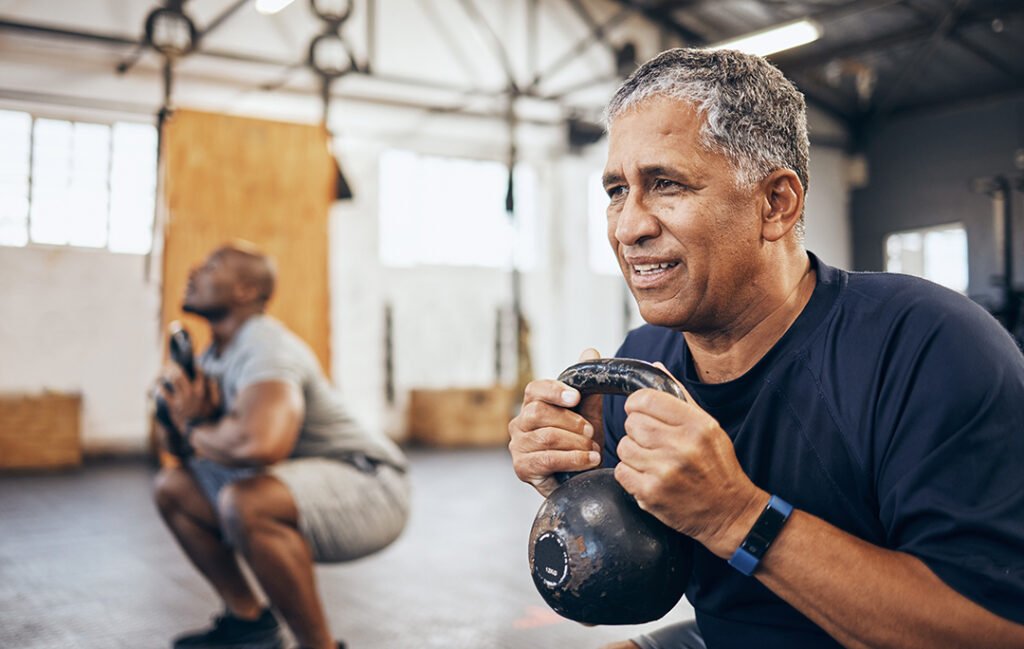
These all occurred with a decrease in the risk of injury and an improvement in balance, an important function in later life.
Call for a chat: 07816 303 742
As we age we lose 3-5% muscle mass every decade, we lose range of motion in various body movements, we are less able to balance, and we find it harder to train in a “progressive overload” way (using heavier weights in the gym as you become stronger). Heavier weights also put more stress on our body structures, like our joints and muscles, and this also makes us more prone to injury.
How Do I Train In The Eccentric Way?
Let’s face it… nobody is going to lift the weight for us or drop us of at the top of a hill so we can just walk down it (listen to Michael’s episode)… you have to do the concentric phase… but here’s the thing, rather than train with heavy weights that put you at your physical limit, lower the heaviness of the weights you are using…
Lift them in whatever time frame you want to but lower them back down over a count of 3-5 seconds
(more if you’d like). That is the essence of eccentric training – lengthening a muscle under resistance – and that counts for whatever exercise you undertake… bench press, biceps curl, seated row, leg extensions, whatever…
And what if you don’t go to the gym? Well consider sitting down very slowly when sitting on a chair, an important function, and then standing up again… repeat this several times a day. Even that, for an elderly person, will build muscle mass in your quadriceps (the muscles on the front of the top of your leg).
And stand on tip-toes on the stairs, holding onto a support, and gradually lower yourself down over the 3-5 seconds and repeat… and do this several times a day – this will build your strength and muscle mass in your calves.
Both of these simple things will soon make your legs stronger and better able to balance around and about in your day to day life.
You may not do as many repetitions as you’d expect, don’t worry about that, eccentric exercise is more tiring… The point is that you are stressing the muscle effectively causing micro-tears and breaking down unwanted adhesions in the muscle fibres… This improves your range of motion and, whilst you do not burn more calories at that point compared to the usual methods, you will have a larger calorific burn after the exercise as the muscle recovers … so another bonus is it is better for weight loss too!!!
Help is at hand! In my clinical practice I work with all of these aspects… Thankfully osteopathy, acupuncture, and my use of K-Laser, all hasten recovery by having an effect on psychological, neurophysiological, blood supply/fluid dynamics, and postural alignment… (If you want more info on this then please take a look at last month’s blog where I discuss the effects of my combination treatments…)
Call for a chat: 07816 303 742